
Simvia allows you to manage supply chains in a way that better reflects how products and organisations are connected in real life. You can do this by assigning products to specific supply chains and by activating or deactivating organisations when needed.
This helps you keep your data accurate and your requests targeted.
Product supply chains
You can assign products directly to specific supply chains. This means products only appear in the chains where they are actually relevant.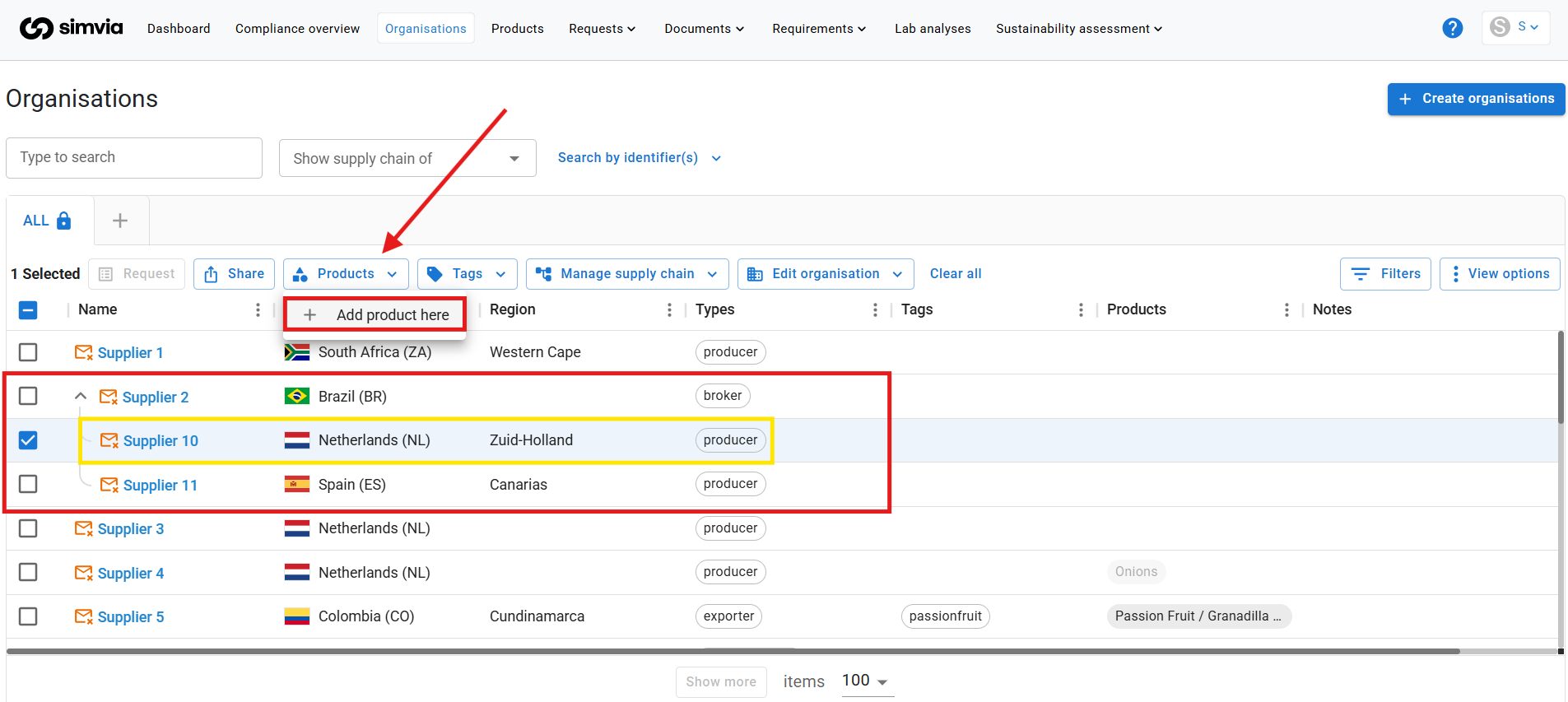
Example
A producer supplies different products through different routes:
- Apples go through one packhouse
- Pears go through another packhouse
Each product is only visible in its correct supply chain, all the way up to the direct supplier.
This setup mirrors how your supply chain works in practice.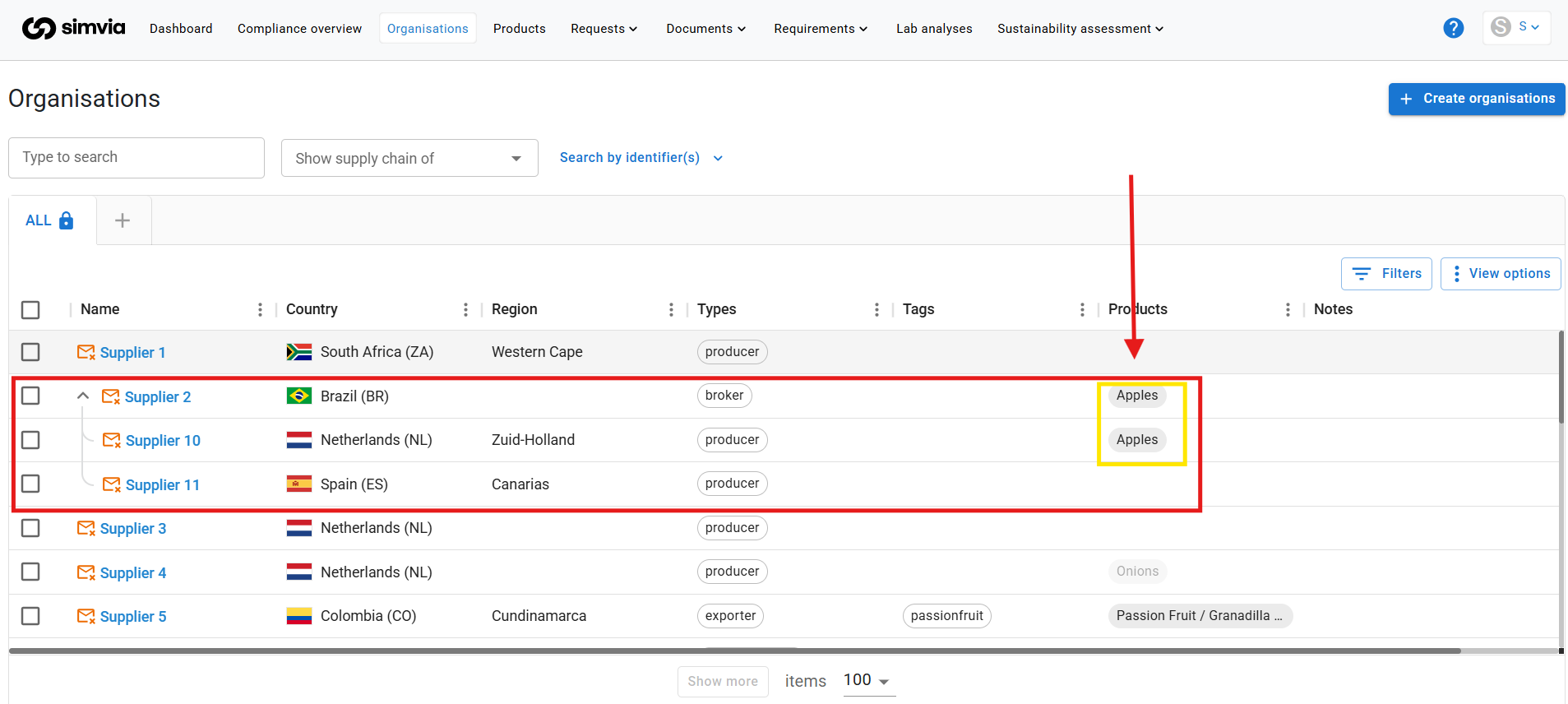
Why this matters
Using product-specific supply chains allows you to:
- Keep product flows accurate
- Send document requests only to the organisations involved with that product
- Activate or deactivate products per supply chain when needed
This avoids confusion and unnecessary requests.
Activating and deactivating organisations
You can activate or deactivate organisations at two levels:
- Globally, across all supply chains
- Within a specific supply chain
The same applies to sub-suppliers. This gives you flexibility without removing historical data.
Why this matters
Activating and deactivating organisations helps you:
- Reflect the current state of your supply chain
- Focus only on active organisations
- Avoid archiving or rebuilding supply chains when things change
This makes it easier to keep your supply chain structure up to date over time.
Keeping your supply chain clean
By combining product supply chains with organisation activation:
- Only relevant organisations receive requests
- Inactive links do not clutter your views
- Your supply chain stays accurate without extra maintenance
This approach supports clearer oversight and more reliable data as your supply chain evolves.